
 Clients
 Partners
 About us




With the recent announcement of Google’s UCP (Universal Commerce Protocol), the eCommerce market is stepping into another pivotal shift.


With the recent announcement of Google’s UCP (Universal Commerce Protocol), the eCommerce market is stepping into another pivotal shift. This blog sets out to explore what this means for fashion retail brands, not as a distant future concept, but as a near-term structural change that intersects with today’s commercial pressures.


UCP is an open technical standard designed to let AI systems, assistants, and commerce platforms communicate with retailers in a consistent way. It defines how products, availability, pricing, and transactions can be understood and executed without requiring custom integrations for every new interface or surface. In plain English, AI agents gain structured access to your product catalog and can shop on behalf of consumers, tailored to their needs, without ever visiting your online storefront.
In that sense, UCP is not a new destination for shoppers. It is a deep rewiring behind the experience.

Rising acquisition costs, declining conversion rates, and increasingly fragmented discovery have already forced retailers to rethink how they grow. At the same time, generative AI has begun to reshape how consumers search, compare, and decide. Universal Commerce Protocol arrives squarely in the middle of this moment, opening up new opportunities for those who are ready, and the real risk of being left behind for those who are not.
It is tempting to see UCP as another disruptive channel or even a threat to the direct-to-consumer model. But this shift has been built for years. It creates a significant opportunity for brands that understand what is really changing and where control still sits.
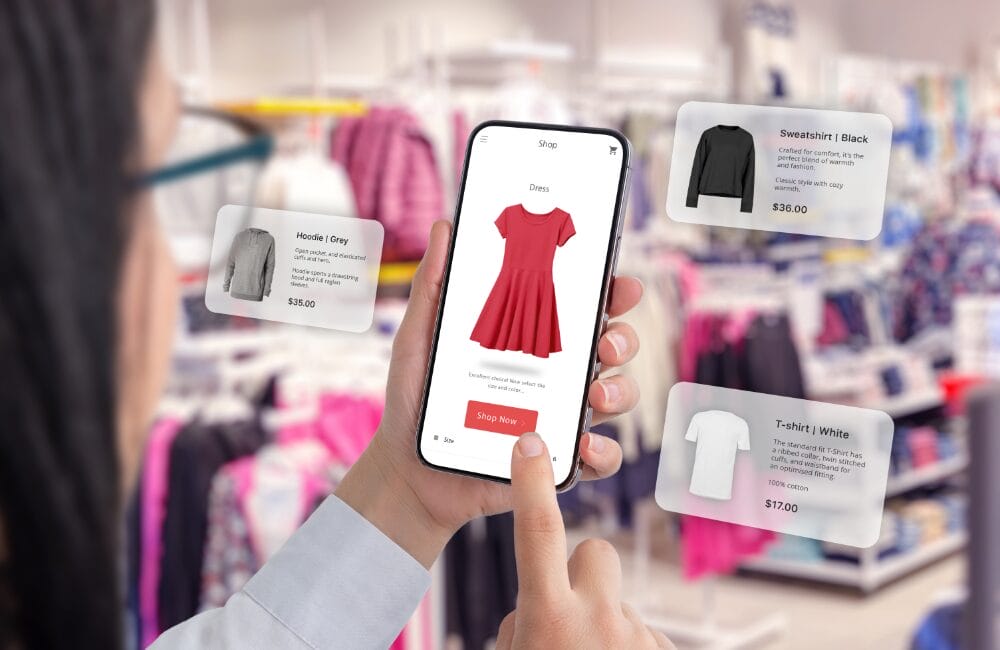
For years, eCommerce has revolved around websites and apps as the primary place where discovery and checkout happen. Every new channel, whether social, search, or marketplace, required bespoke feeds and fragile integrations. UCP changes that by introducing a shared language for commerce, allowing AI agents to move from intent to transaction without needing to ever “visit” a site in the traditional sense.
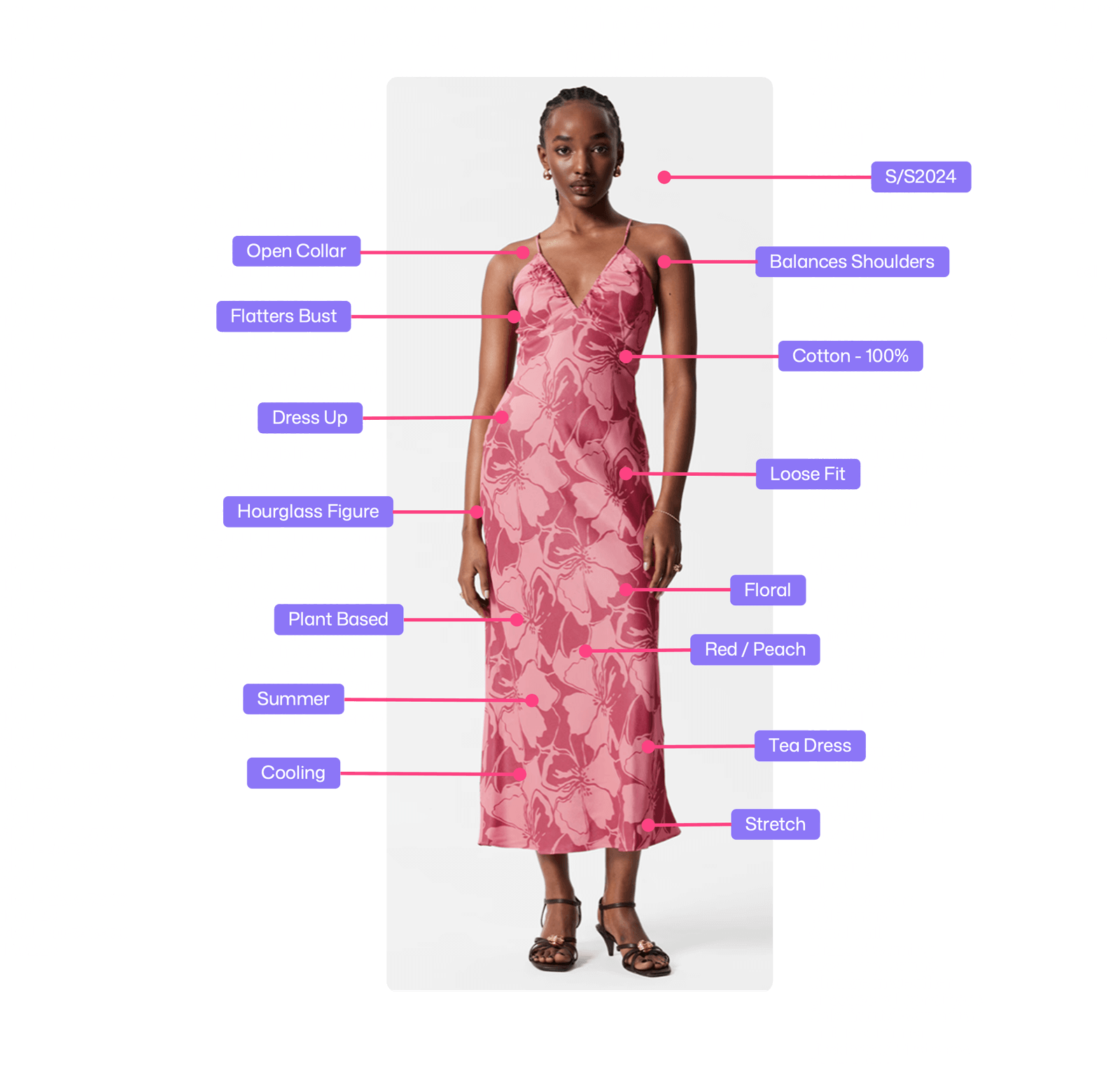
Shoppers care primarily about fit, feel, occasion, silhouette, and context, often more than price or functional specification. Humans interpret these style signals instinctively. Machines do not. They rely entirely on structure.
UCP enables AI-mediated journeys where discovery, comparison, and checkout can happen within a single conversational flow. The agent does not browse visually or scroll endlessly. It asks questions, evaluates structured product information, and makes decisions on behalf of the shopper. This is the real change UCP introduces. Commerce is moving away from human-led browsing sessions and toward machine-interpreted intent.
From our perspective, this is where much of the broader UCP conversation becomes both exciting and incomplete. UCP is often described as a highly unified, AI-driven layer that brings data, commerce, and activation together. At the same time, AI-generated outputs are frequently caveated as potentially inaccurate or unreliable. That tension points to a familiar truth: without clean, well-governed first-party data increases uncertainty rather than reducing it.
So the strategic question is not whether UCP will matter. It is whether a retailer’s product foundation is understandable to the systems that increasingly mediate discovery and purchase.

Many of the early reactions to UCP have focused on fear and loss of control. If AI agents are choosing products, where does brand differentiation go? If checkout happens elsewhere, what happens to traffic and owned experiences? Those concerns are understandable, but they miss a more important point.
UCP does not remove retailers from the transaction. They keep the revenue, manage fulfilment, control pricing and availability, and maintain customer relationships. What changes is not ownership, but how customers arrive at checkout. The real risk introduced by UCP is invisibility.
In AI-mediated commerce, products surface because an AI system can understand how well a product matches a shopper’s intent. This is the quiet beginning of a farewell to the visually perfect grid as the primary driver of discovery.

If an assistant is asked to find “wide-leg trousers that feel smart but relaxed, breathable enough for a spring holiday,” it will query structured attributes related to fit, fabric, drape, and occasion. Products that cannot express those qualities in machine-readable form simply do not appear. Brands that prepare early build an advantage that compounds and becomes harder to close over time.
However, unification alone does not guarantee visibility or performance. If data is not genuinely unified at source, if activation cannot be executed operationally across channels, or if AI sits on top of the stack rather than being embedded into the data model itself, the promise of “AI-driven commerce” quickly collapses into abstraction.
It is also important to step back and look at the broader commercial implications. The same product clarity that allows AI agents to surface the right items also improves today’s most important channels. Paid media performs better when product signals are precise. On-site journeys convert better when landing pages align with intent. Full-price sell-through improves when shoppers have clearer expectations around fit, feel, and use. In a market where growth has become expensive and margins are under pressure, relevance directly affects profitability.
Mapp Fashion enriches each product with deep, consistent attributes drawn from a fashion-specific taxonomy of more than 26,000 terms. These attributes go beyond physical characteristics to include contextual and intent-driven dimensions, such as how a garment fits, how it feels to wear, when it works best, and what role it plays in a wardrobe.

Mapp Fashion’s models are trained and continuously validated by professional stylists, ensuring that the data reflects real-world fashion logic rather than abstract pattern matching. Automation provides scale, while human expertise ensures consistency and accuracy.
In a UCP-enabled environment, this depth of understanding becomes a source of visibility.
When AI agents query a retailer’s catalog, Mapp Fashion–enriched data allows products to be matched to intent with far greater precision. Instead of being described only by category and color, items can be understood in terms that are human-led yet machine-readable. That precision determines whether a product is recommended, compared, or ignored entirely.
UCP makes it more urgent, not less, to get product data into order. It will quickly expose which retailers have invested in true product understanding and which have not. Mapp Fashion helps retailers close that gap by strengthening the product data that already feeds their existing stack, rather than replacing it.
We already know that universal commerce does not reward the loudest brands or the largest budgets. It rewards clarity. In the next phase of fashion eCommerce, being understood is the prerequisite for being chosen.




 DE
DE