The discovery equation for fashion retail doesn’t work anymore.
For twenty years, fashion retail ran on a simple equation: more traffic, same conversion rate = more revenue. The entire discipline of ecommerce was built on that foundation holding true.
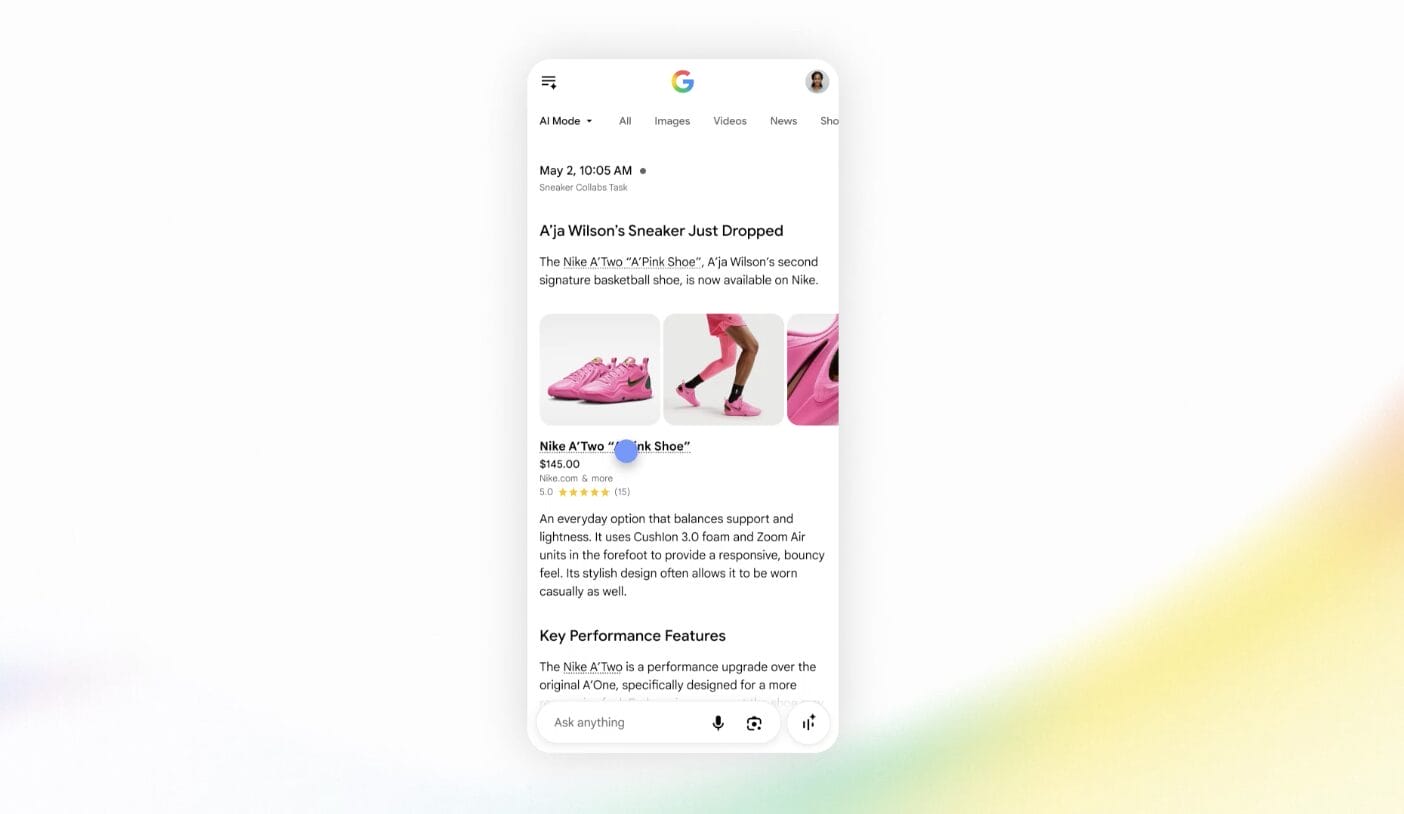
Two weeks ago, Google announced that the equation has fundamentally changed. AI Mode has passed one billion monthly users. AI search queries are more than doubling every quarter. The search box that operated on keywords for 25 years has been rebuilt around artificial intelligence.
In the same week, Google published their guidance on optimizing for AI search. One of the key points they made was reassuring brands that there was no need to do anything special. No new file formats, no content chunking, no rewriting copy for machines. Google’s systems already understand synonyms and semantic meaning.
Google is absolutely right. Most of the AI optimization industry that emerged in the last year is selling ineffective hacks. But that guidance has been misread as “you don’t need to do anything,” and that interpretation is where fashion brands will lose the next two years.
Understanding language isn't creating missing facts
Here’s the critical distinction. Google is talking about understanding language. Understanding is not creation.
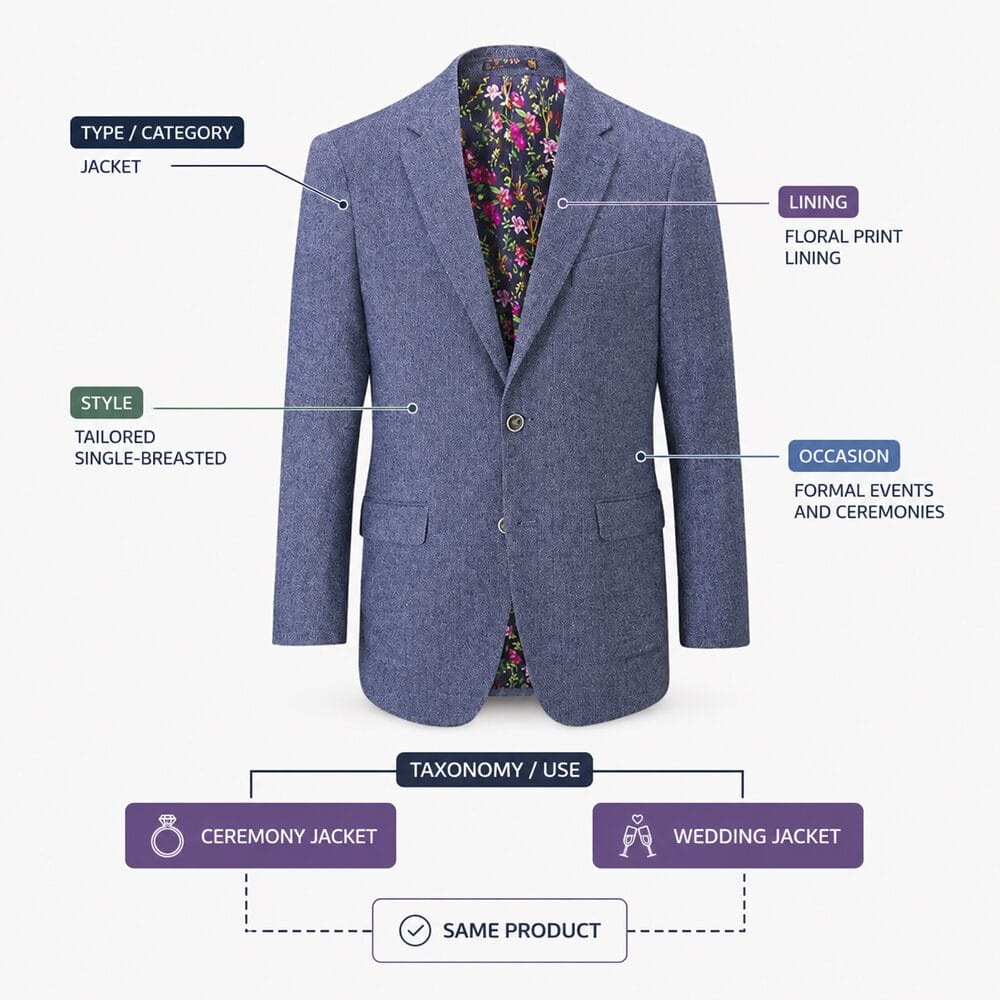
An AI can recognize that “ceremony jacket” and “wedding jacket” mean the same thing. It cannot invent the fact that a particular jacket suits a ceremony if that information exists nowhere – not in structured product fields, not in product descriptions. AI operates on content that exists. It doesn’t manufacture what’s missing.
In most fashion catalogues, the essential facts are missing.
This isn’t just our interpretation. At our Fashion Decoded event in April, Google’s Head of Shopping Partnerships for EMEA told a room of retailers that Google is piloting 32 new product attributes, including occasion and location, so that large language models can surface products for complex queries like “a dress for a beach wedding.”
When the world’s largest discovery platform asks you to send richer product data, the question stops being whether this matters. It becomes how quickly you can act on it.
The traffic data that changes everything
When we published Who Owns Discovery in April, the finding that drew the most pushback was that AI assistant referral traffic to fashion retailers grew 172 times in 13 months. Too small to act on, critics said.
But Google has now removed that argument. A discovery layer serving one billion users is not a rounding error, it’s the front door.
In our dataset of 397 fashion retailers, 340 were receiving none of that AI referral traffic. Zero. The 57 brands capturing it shared one structural characteristic, and it wasn’t marketing budget. The facts about their products existed in a form machines could read.
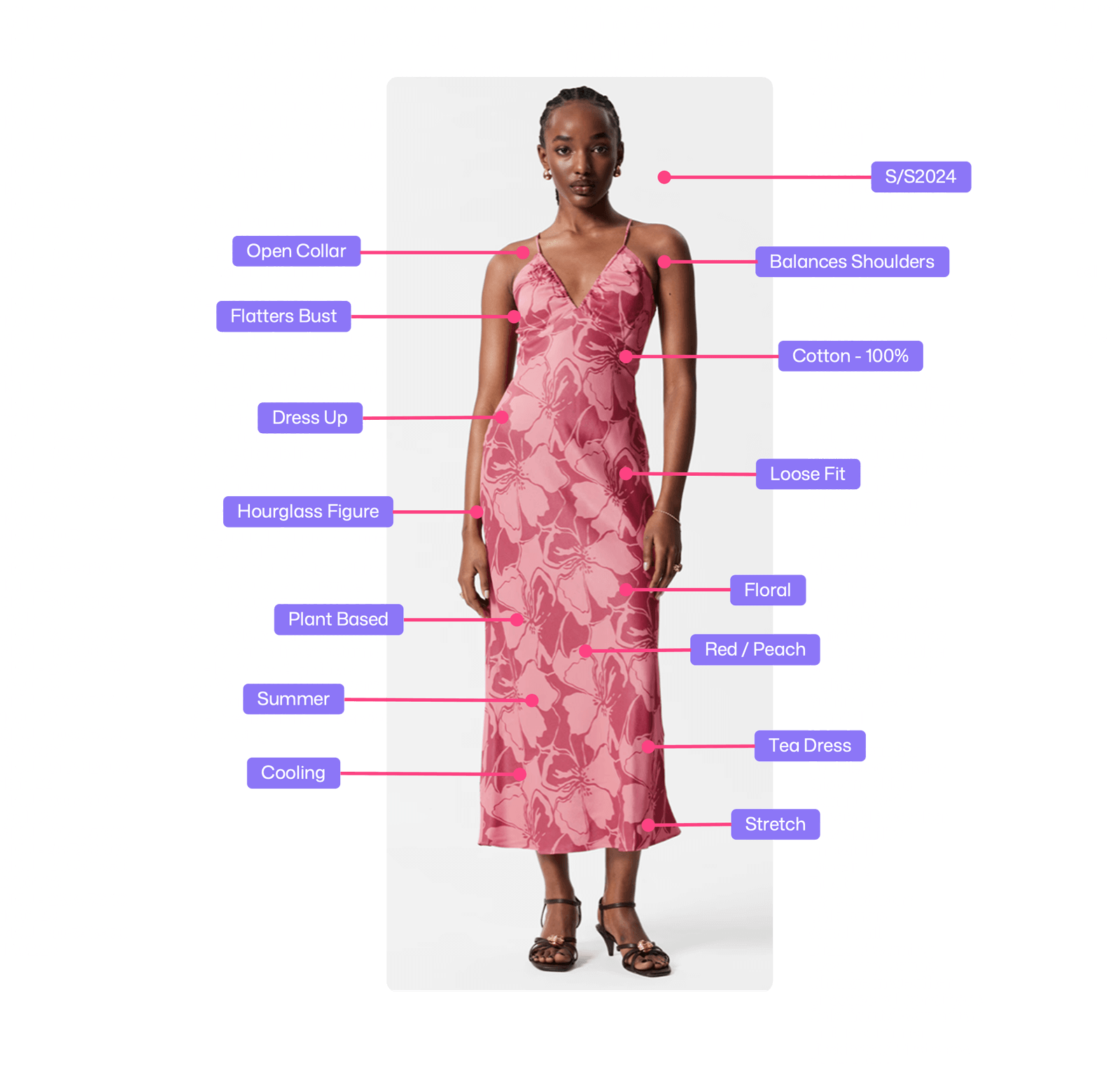
Consider what most product data actually contains. A customer searches for “a navy knitted midi dress with three-quarter sleeves.” The structured data offers thin attributes and marketing copy. The garment is in stock and the search still misses it. Off-the-shelf models achieve 70-80% accuracy on basic product features, which compounds to roughly 41% accuracy across four attributes. The rest of the range becomes invisible.
AI discovery is the sixth channel, not the first
Here’s what the AI-search framing obscures, and it’s the more important insight. The same rich product data layer that enables machine discovery (occasion, fit, fabric, cut), isn’t an AI tactic. It feeds everything.
Where rich product data creates value
- On-site search and product discovery
- Recommendations and personalization engines
- In-store associates conducting clienteling
- Marketplace and wholesale partner channels
- Cross-channel consistency and brand integrity
- AI discovery platforms
Google influences one of those six channels. For fashion brands where physical retail represents 80-90% of revenue, most value from semantically rich product catalogues never touches the digital funnel.
When the conversation collapses into “AI search versus SEO,” everyone has lost the plot. The real question is whether a brand maintains a product semantic layer that feeds six channels simultaneously.
The brand integrity cost nobody discusses
There’s a second cost worth naming, and it hits premium fashion brands hardest. RAG (Retrieval-Augmented Generation), the mechanism Google itself describes, pulls from indexed pages. Where brand pages contain thin product information, AI assembles product stories from reviews, marketplaces, and third parties.
The description of your product, in the place one billion people now start their shopping journey, gets written by other people from sources you don’t control. That’s not an SEO problem, it is brand integrity erosion.
The economics make the choice urgent
Now consider this against fashion retail economics. Paid search nearly tripled its share of fashion retail traffic in twelve months, from 2.8% to 8.2%. More than half of the 84 retailers we analyzed with public financials saw operating margins decline even as sector traffic hit a record 53.7 billion visits.
Most concerning: 65% of fashion retailers now spend more acquiring paid search traffic than it returns in operating margin. We call this threshold the 8% Line.
The brands gaining margin share one characteristic: more than 65% of their traffic arrives through channels they own. Where that owned traffic base exists, paid search amplifies demand the brand has already earned. The same logic applies to every discovery channel, and the foundation underlying all of them is product data quality.
Fix what's behind the door
Google is right about AI optimization. Stop buying AI-search hacks.
Then build what the hacks were attempting to substitute: a product data layer accurate enough that machines, your own site, your stores, and your marketplace partners can all rely on it. This isn’t about gaming discovery algorithms. It’s about having facts worth discovering.
Google told one billion people the front door to shopping had changed. It also told brands to stop trying to game the lock. The fashion brands that win will do neither.
They’ll fix what’s behind the door.
Want to know more? Get in touch with our experts.
Planning to join Shoptalk? Visit us at booth AA22!


 Clients
 Partners
 About us





 DE
DE