
 Clients
 Partners
 About us




This year's conference was clear about what's broken in fashion product data. What it didn't offer was a fix. There is a massive gap in the understanding of what it is and how to fix it. It really matters that retailers are thinking this all the way through.
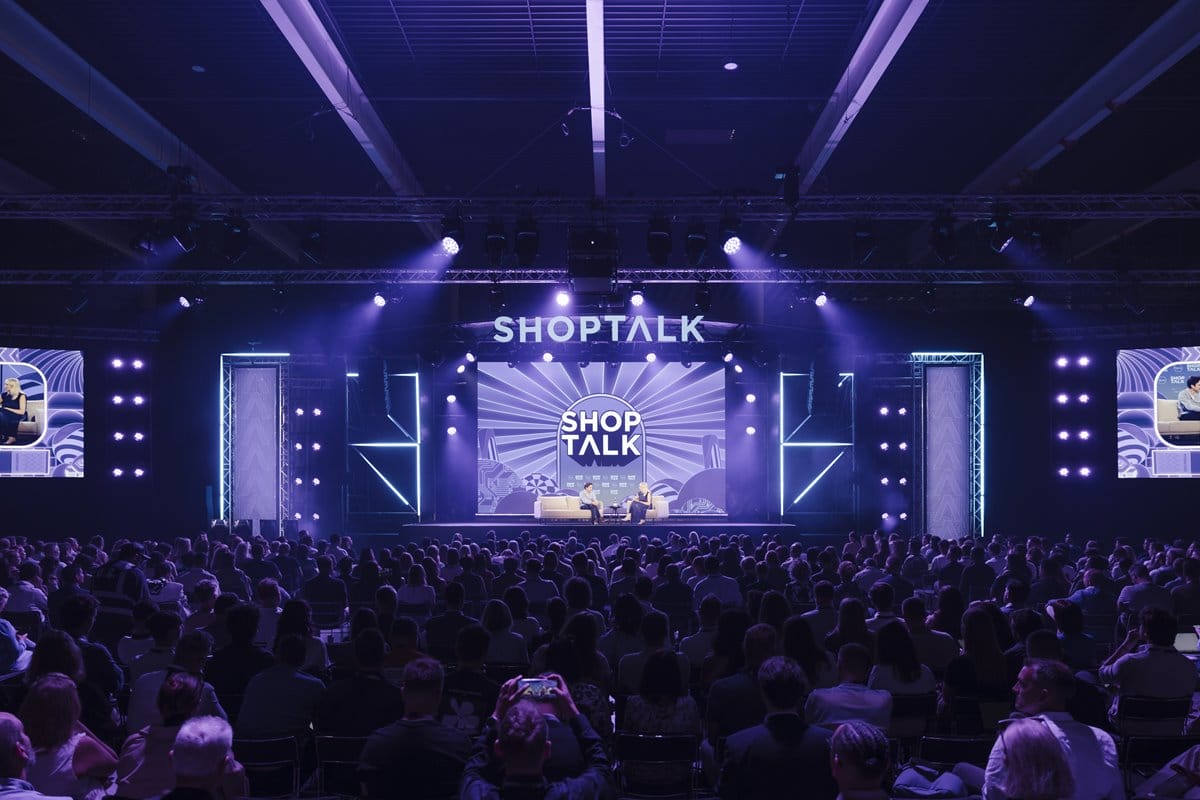

It’s two weeks since Shoptalk Europe and, in my mind, there was a key part of the conversation missing. Some of the key stats: the $3.5 trillion agentic commerce projection, the 4,700% year-on-year growth in GenAI referral traffic, the trust paradox, where 80% of consumers say they distrust AI and yet 70% are heavily influenced by AI recommendations when they actually buy.
Leaders from Microsoft, Accenture, PwC, and a room full of retailers all arrived at the same conclusion: most fashion retailers don’t have good enough product data to make any of it work. Everyone named the problem. Nobody put a solution on the table.
There is A LOT of scraping going on but a lot of vendors trying to scramble a solution together but the data required to actually service the actual customers and guardrails that keep a brand safe, that’s the bit worth talking about.
Session after session, the conference agreed on the same things. AI agents need to understand products to surface them accurately. Answer Engine Optimisation (AEO), making your content readable by AI engines rather than search engines, only works if your product descriptions are rich enough to answer the natural language queries shoppers are now using. Dynamic PDPs that personalise to shopper intent need a data layer strong enough to carry the weight. All of it true. None of it possible until you fix what sits underneath.
The numbers spell out the stakes. Traffic from generative AI platforms has grown 1,200% (PwC data), and yet 56% of CEOs still report no significant financial benefit from AI. The technology is ready. For most fashion retailers, the product data isn’t.
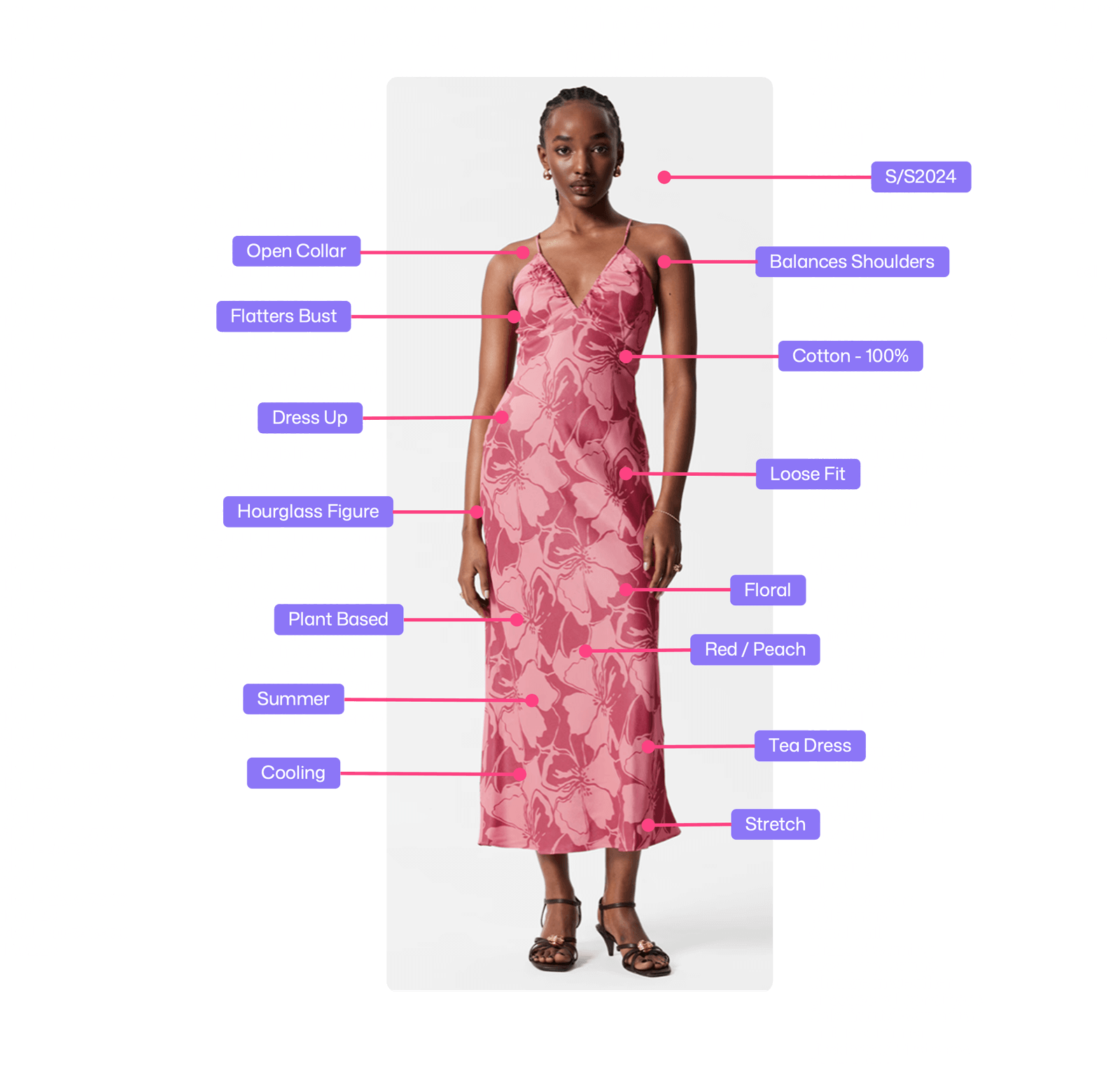
The reason is more structural than people like to admit. Most fashion retailers hold 10–12 attributes per product, data built for the supply chain and merchandising, not for the shopper. It describes what a product is. It says nothing about what it does, who it suits, what occasion it’s for, how it fits, or how it feels. Shoppers think in 30–50 dimensions. You can’t close that gap with clever technology bolted onto thin data.
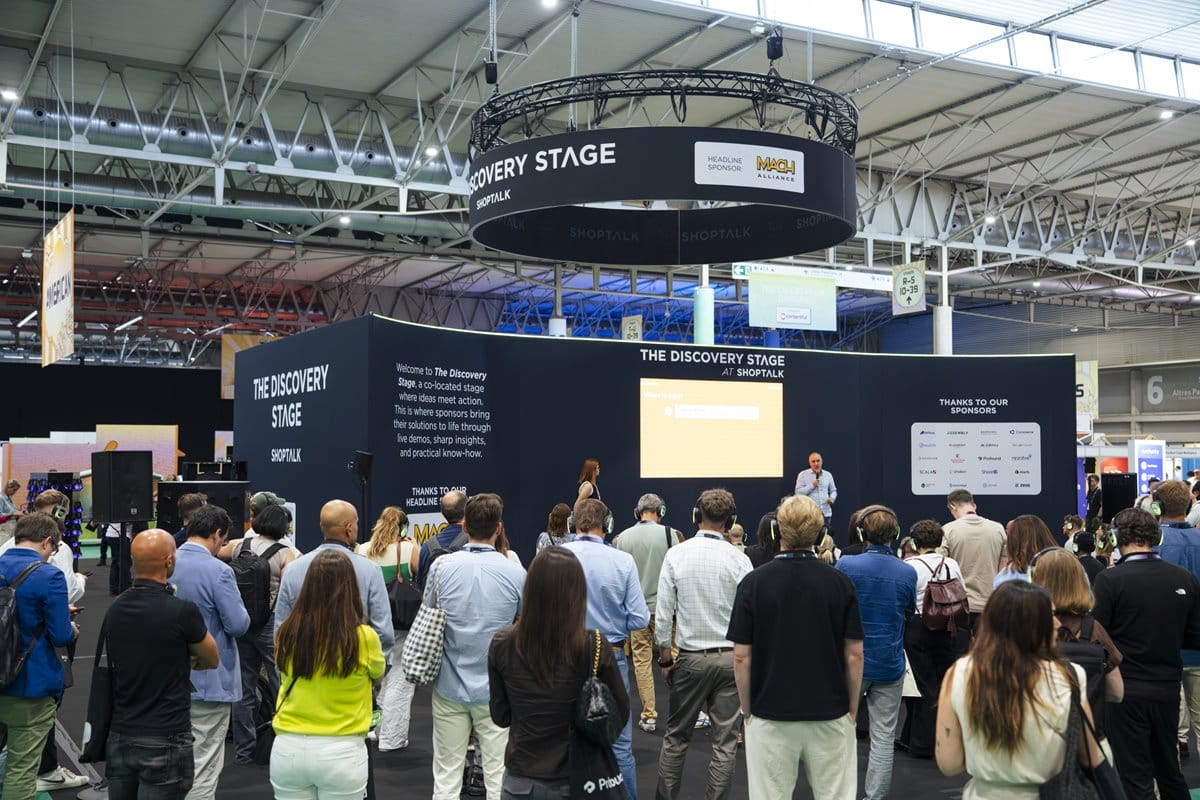
This was the part of Shoptalk that felt most urgent to me, and I think most teams are still underestimating it.
When a shopper types “what should I wear to a summer wedding in Tuscany” into ChatGPT or Google AI Mode, those engines go straight to your product pages to build the answer. A static PDP written two seasons ago, with 10 generic attributes and a boilerplate description, doesn’t just underperform on your own site. It decides whether you get surfaced at all in the channel that’s growing fastest and converting best. Usually, it means you don’t.
AI traffic is still a small share of total visits. But the quality of that segment is already well ahead of search or social: higher intent, higher basket values, stronger conversion. The retailers building for it now, while it’s small, are the ones who’ll own it when it scales. That window is open today, not in four years when the trillions turn up.
Sports retail shows you what getting it right looks like. Decathlon, Adidas, and Nike get cited far more often by AI engines than their fashion equivalents. Not because they’ve spent more on AI, but because their product data has always been technical. Activity, specification, and performance attributes are exactly what AI engines can read and surface with confidence. Fashion has no equivalent head start. So it has to build one on purpose.
Three specific pain points kept surfacing in conversations on the Shoptalk floor, and they all trace back to the same place.
Every one of those problems has the same root. Fashion doesn’t have a structured, shared language for describing products the way shoppers actually think about them.
Enrichment patches some of it. What’s actually needed is a fashion knowledge graph: a connected system where products, attributes, occasions, aesthetics, fit profiles, outfit-compatibility rules, and brand DNA aren’t just tagged, they’re related to each other. So a navy midi dress is understood in relation to the occasions it suits, the body shapes it flatters, the garments it pairs with, and the trend signals it connects to. The meaning is encoded and consistent, not guessed on the fly from thin data by a model that gives you a different answer every time you ask.
Enrichment gives you a label. A knowledge graph gives you a language. Shoptalk described the symptoms with real clarity this year, but the knowledge graph is the diagnosis. And it matters because that’s what makes AI agent outputs reliable, on-brand, and commercially useful, rather than confident and wrong.
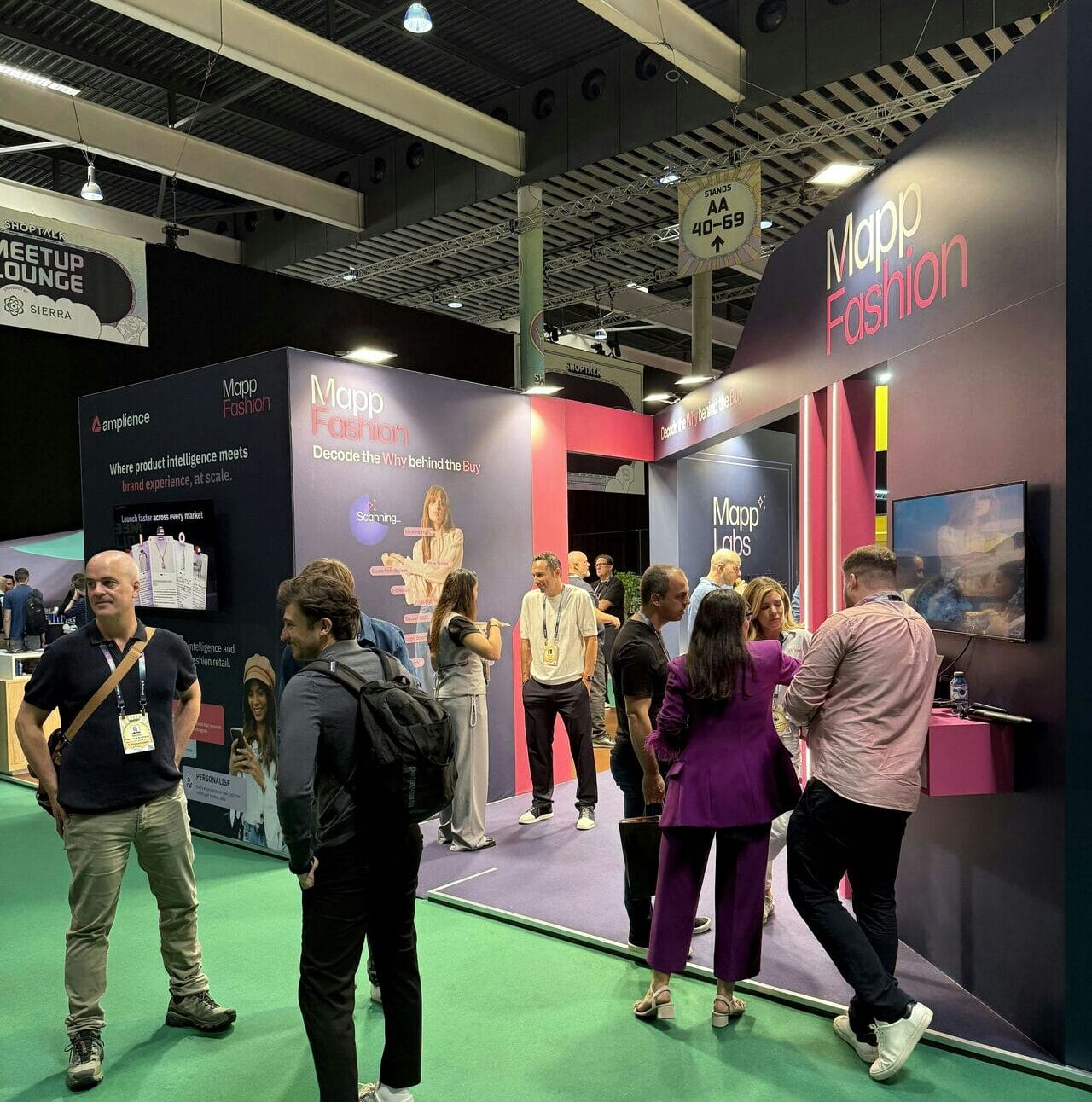
We’ve spent 15 years building exactly this. Over 10 million products labelled, a taxonomy of 25,000 elements, 750 context categories, and more than 12,500 expert outfit-compatibility rules, built by stylists, verified by domain experts, and refined continuously. That deterministic rule layer is what keeps AI agents on-brand at every surface, and it’s the thing generic enrichment vendors can’t replicate, because it takes a decade of labelling work and real fashion expertise to build, not a fine-tuning run.
That foundation is what unlocks everything Shoptalk spent two days agreeing was needed: AI-ready product data, personalised outfits, returns intelligence at feature level, dynamic PDPs, and size curves that let buying teams stop averaging.
The missing piece everyone described has a name. We’ve already built it.
Talk to the Mapp Fashion team ›


 DE
DE